
Why Good Products Still Get Bad Reviews (and How to Catch Issues Before Customers Do)
By Parker Swanson Product Readiness — Helping brands catch product issues before they show up in reviews A product arrives in good condition. Structurally, ev..
Product Readiness — Helping brands catch product issues before they show up in reviews
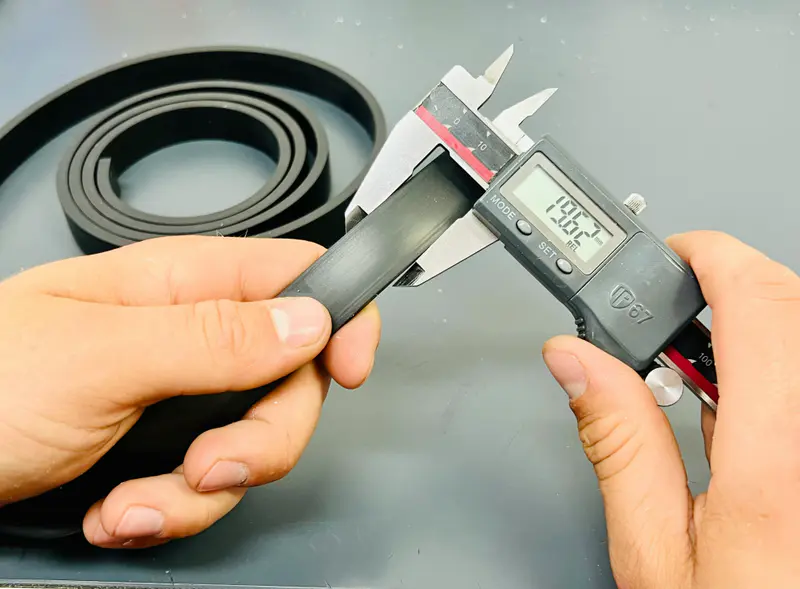
A product arrives in good condition. Structurally, everything looks solid. No visible defects.
But when it’s handled, you hear something inside — a faint rattling sound.
At the factory, this had actually been “fixed.”
During production, small debris was getting trapped inside hollow components. To solve it, the team added a small amount of adhesive inside the tubing and rotated the parts so everything would stick in place.
It worked — at least during inspection. No more noise, no visible issues, and the product passed.
But once the product was in real use, the fix created a different problem.
In some cases, excess adhesive made its way onto the exterior during assembly. At first, it hardened and went unnoticed. But over time, with normal handling and wear, those areas started to change — becoming slightly tacky and picking up dirt and debris.
Now instead of a minor internal issue no customer would have noticed, the product had
visible, hard-to-clean spots that affected the overall experience.
Nothing was technically “broken.”
Inspection passed.
But the problem only showed up once the product was in a real environment.
That’s usually where the negative experience starts.
And more often than not, it passed inspection without any issues.
The assumption most brands make
Most brands assume that if a product passed inspection, it’s ready to go.
On paper, that makes sense.
If the factory produced it correctly and the inspection report looks clean, what else is there?
But “meets spec” and “works well for a customer” are not always the same thing.
Inspection vs. real-world use
Inspection is designed to confirm that a product meets requirements.
Are the dimensions correct?
Do the components match the spec?
Does it power on or function at a basic level?
Those checks are necessary.
But they don’t always reflect what happens once the product is actually used — especially by someone seeing and touching it for the first time.
A product can pass every single line item on an inspection checklist and still feel confusing, inconsistent, or frustrating in real use.
Where negative reviews actually come from
When you look at product reviews, a lot of the complaints follow the same pattern.
Not major defects — smaller things that add up:
Instructions that are technically correct, but hard (and frustrating) to follow
Setup that feels way more complicated than expected
Packaging that didn’t hold up during real shipping
Products that work for the most part, but not consistently
Small usability issues that make the experience feel off
Individually, none of these seem like a big deal.
But from the customer’s perspective, they are the experience.
And that’s what gets reflected in reviews.
The upstream problem

By the time these issues show up in reviews, they’re already out there.
At that point, brands are reacting:
responding to complaints
issuing replacements or refunds
trying to improve perception any way they can
But a lot of these problems didn’t start with marketing.
They started much earlier — before the product ever reached the customer.
What most brands don’t actually test (but should)
Most teams aren’t ignoring quality — they’re just testing the wrong things, or testing them in the wrong context.
Products are tested in controlled environments — not how customers actually use them → a device works perfectly on a bench test, but in real use (longer sessions, different conditions, less careful handling) it starts to loosen, overheat, or behave inconsistently
Packaging is approved visually — not tested through real shipping conditions → internal supports hold everything in place when handled carefully, but during actual transit (vibration, drops, stacking), they fail — and products arrive damaged even though inspection passed
Instructions are written by people who already understand the product→ a step that feels “obvious” gets skipped (like aligning a part a certain way before tightening), so first-time users assemble it incorrectly and assume the product is defective
“Functionality” is confirmed once — but not consistency over repeated use → components fit correctly during inspection, but small tolerance issues cause them to shift, loosen, or stop sitting flush after a few uses
No one checks how a first-time user actually experiences setup → setup technically works, but takes longer than expected, requires guesswork, or leads to small mistakes that create frustration right away
But those checks don’t always reflect what happens once the product is in a customer’s hands.
That’s why you end up with products that pass inspection but still arrive with issues.
They meet requirements — but fail in real-world use.
And the problems get surfaced by customers instead of being caught in QC.
What’s missing
What’s often missing is a step between “factory-approved” and “ready for the customer.”
Not another checklist — a different lens.
Looking at the product the way a customer would:
using it for the first time
figuring it out without context
noticing where things feel unclear, inconsistent, or off
Because that’s what ultimately shapes the experience — and what ends up in reviews.
Why this matters
The goal isn’t just to ship a product that passes inspection. It’s to ship a product that actually feels ready.
When that happens, you see it directly:
fewer negative reviews
fewer returns
smoother launches
Not because marketing changed — but because the product experience did.
If you’re launching a product — or seeing the same issues show up in reviews — it’s probably not random.
It’s worth taking a closer look at where those problems are actually coming from.
If you want help catching these issues before they show up in reviews, you can book a quick risk check at https://productreadiness.carrd.co/
About the author
Parker Swanson works with consumer brands to identify real-world product issues before they reach customers. His work focuses on bridging the gap between factory inspection and actual product experience.
Learn how to get more reviews.
Monthly tips from industry insiders on using customer feedback to increase sales.